


Coach’s Corner is a DIEEC blog dedicated to providing fresh ideas for your practice. Meghan Julia Pallante is our featured blogger and provides new content on a monthly basis.

Meghan Julia Pallante
Meghan is a quality improvement specialist and has been with DIEEC for over ten years. She holds a master’s degree in Human Development and Family Studies from the University of Delaware.
Dot, Dot, Dot…8 Ways to Get Creative with Dot Stickers
July 2026
Don’t let their simple look fool you: dot stickers are an MVP when it comes to easy, inexpensive activities. They’re cost-effective, easy to store, and endlessly versatile. They can be found at any dollar store or craft store. Below are 8 ways to start sticking! These ideas leave plenty of room for children to explore creatively, and for teachers to scaffold activities to meet individual needs.
Safety tip: Purchase paper stickers, rather than plastic ones. They pose less of a choking hazard. All children should be supervised closely, regardless of sticker type.
Open-ended play
1) Drawing with dots– Lay out dot stickers, paper, and some crayons or markers, and invite kids to get creative! Let them use their imaginations to create different pictures with the stickers. Add variety by adding different-sized dot stickers. Ask children to tell you about their creations: “What does that look like to you?”
Variations:
Go big: tape butcher paper to a wall and use it as a blank canvas
Go low: Tape paper to the underside of the table- children can lie on their backs and reach up to stick the dots on the paper.
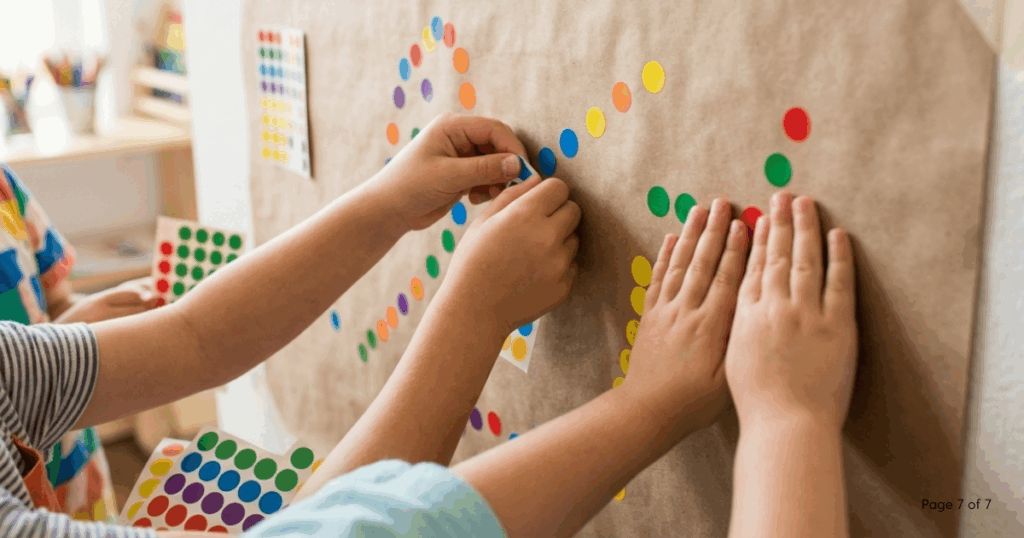
2) Sticky Lab– Provide a variety of textures and let children experiment with sticking dots to them. Which textures do the dots stick to? Textures can include carpet samples, burlap, foil, wax or parchment paper, felt, empty yogurt containers, cardboard, bubble wrap, a dry sponge… Keep safety and choking hazards in mind when selecting textures for use with toddlers.
Variation:
Instead of collecting all the textures in one place, invite children to walk around the room with a few stickers to test out surfaces themselves (with supervision). Where do they think a sticker will stick? Where will it fall off?
3) Add stickers to the dramatic play area– they can become price stickers in a grocery store, or stamps on pretend letters…No need to write on them in advance…blank stickers are great kick-starters for imaginative play.
Patterning
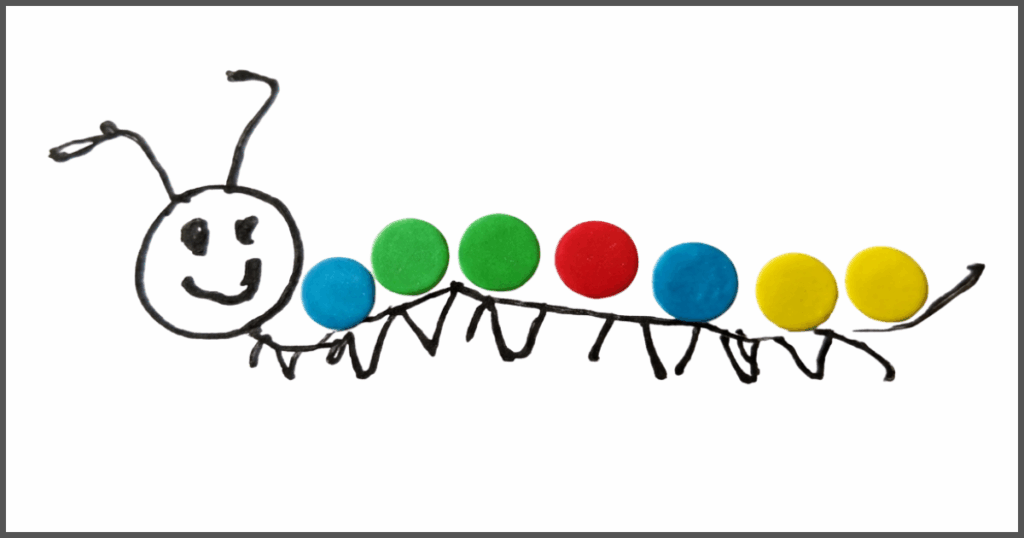
4) Caterpillar Scenes– Invite children to create a caterpillar. The children can draw a caterpillar face with eyes, nose, mouth, antenna, etc. Then the children can add dot stickers for the body, and even draw a background scene for their caterpillar! Children might choose to include the stickers in other parts of the picture as well.
Adjust according to your children’s abilities: You can specify a set number of stickers to add, or suggest that children create a pattern using the different colors.
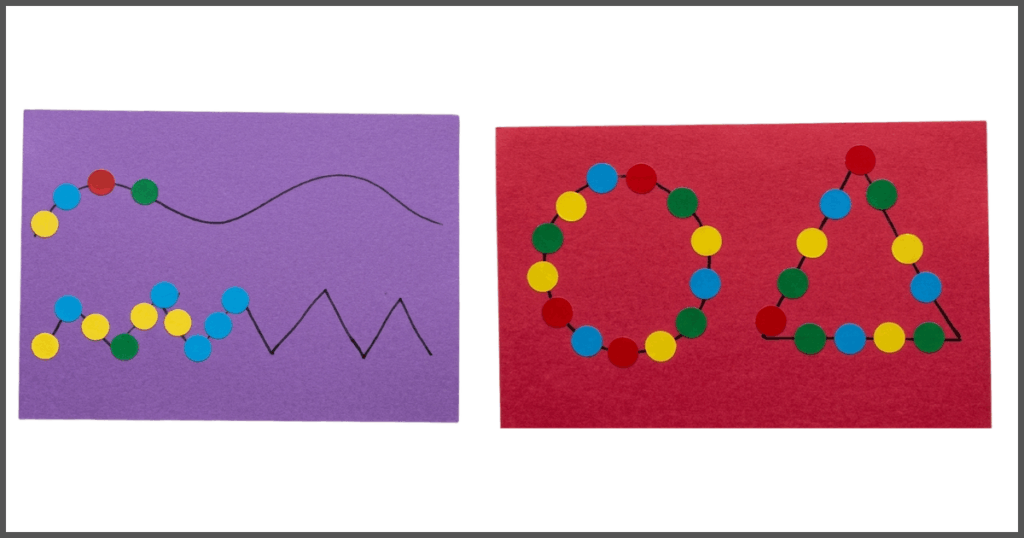
5) Follow That Line– Children or educators can draw different types of lines (squiggly, jagged, straight, etc.) or shapes on paper. Then, provide dot stickers and see what children do! They might place stickers along the lines, or fill in shapes, or something else entirely! You can challenge older children to follow a path or create an alternating pattern along the lines.
Matching
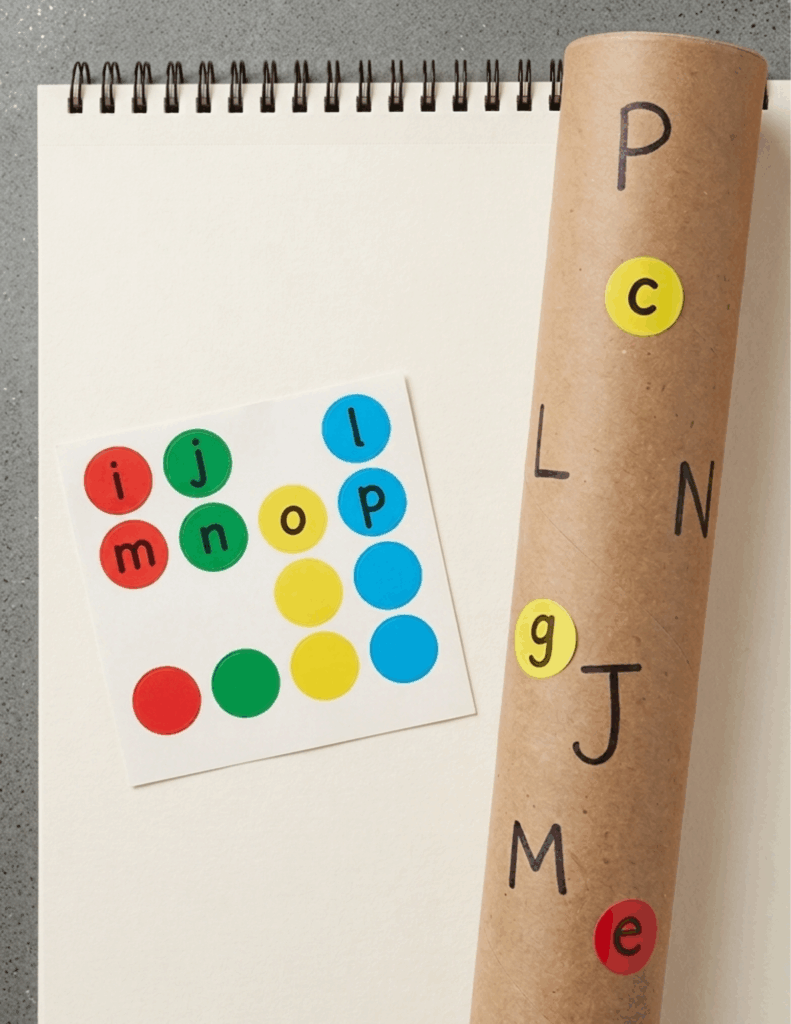
6) On a roll– Write letters on a paper towel roll. Write the same letters on dot stickers. Have preschool children put the matching sticker on each letter on the paper towel roll.
There are plenty of variations for this activity!
- Swap letters for colors: Draw bold colored circles on the paper or paper towel roll, and encourage children to add stickers of the matching color on each circle.
- For children who are ready for a greater challenge, place uppercase letters on the paper towel roll and lowercase letters on the dot stickers. This would make a great extension activity after reading Chicka Chicka, Boom Boom!
- For younger children, simply let them explore placing stickers on a curved surface.
Tip: Consider taping the paper towel roll to the wall to make it more stable, so little hands can focus on the fine motor skills of peeling and sticking.
Incorporating stickers into existing play
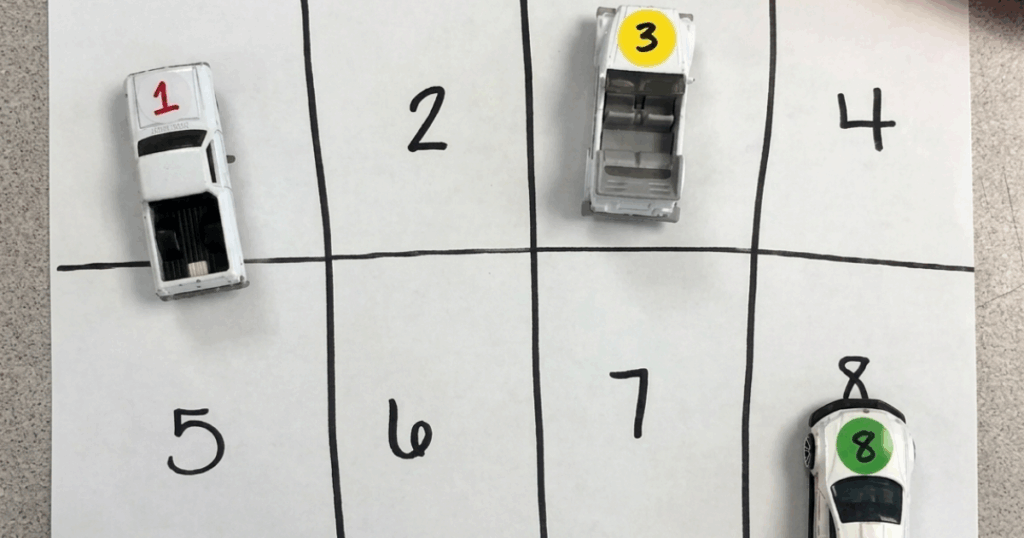
7) Parking lot- This is a great activity to add to the block area! Create a parking lot on paper or cardboard with numbered parking spots. Use dot stickers to label toy cars. Children can match the numbered cars with their parking spots. You can also do this with letters or colors.
For older children:
- Place uppercase letters on the cars, and lowercase letters in the parking spaces.
- Put different numbers of dots into parking spots, then park the toy car with the corresponding numeral on it.
For younger children:
- Simply place colored stickers on cars and in parking spaces, and see how children notice and use them in their play!
Open-ended variations:
Child-Led Sorting: This activity can be adapted for other types of vehicles, animals, or other items. Observe how the children are naturally organizing and using the items. Are they grouping them by color? Size? Type? Hand them the dot stickers and say, “I notice all the brown animals are together in your zoo. How could we use these stickers to mark their special spot in the zoo?”
Once you offer a prompt or two, you’ll probably see children coming up with their own ideas for using dot stickers to define the “rules” for their play!
8) Body vocabulary- stick dots to your nose, your shoe, your shoulder…and invite children to do the same. “I put a dot on my knee! Will a dot stick to your knee?”
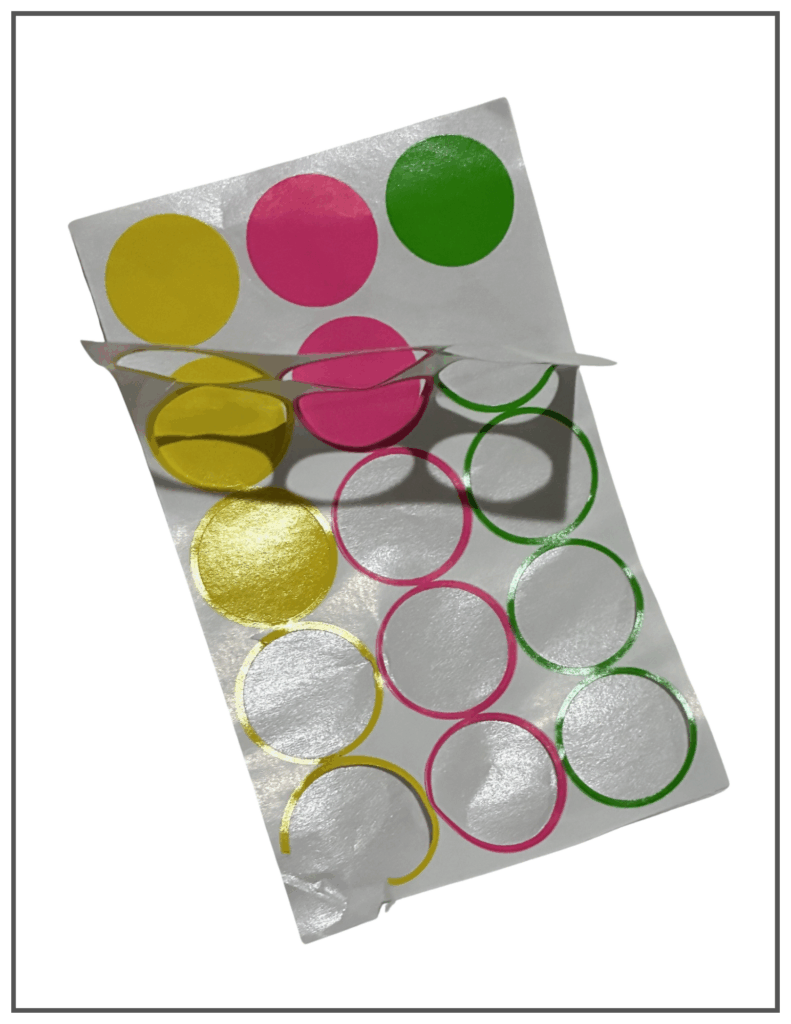
Pro-tip: Peeling stickers can be a bit tricky for little hands. Removing the backing from the stickers can make it easier for the children to peel themselves.
We would love to hear about other ways educators are using dot stickers! Get creative and share your ideas with us!
Resources
The blog posts listed below offer perspectives on how sticker play can benefit young children. Please note that the inclusion of these specific blog posts does not constitute an endorsement by DIEEC of any curriculum or broader content promoted by these sources.
Benefits of Stickers for Toddlers – Inspired Learning The Experience Curriculum
10 Reasons Why Every Kid Needs to Play With Stickers – The OT Toolbox